 How can governments ensure that public services are delivered effectively, efficiently and in the public interest? And how should they decide whether to provide services in-house, cooperate with other public authorities or engage private providers?
These questions were at the heart of a study visit organised by EIPA’s Antenna in Luxembourg for a delegation of senior public officials from Uzbekistan at the end of October.
Through expert-led sessions, practical exercises and exchanges with European institutions, participants explored different models of public service delivery, examined their advantages and challenges, and considered how European experience could inform ongoing public administration reforms in Uzbekistan.
“The study visit allowed us to systematically examine the approaches of European countries to public administration, understand their advantages and possible limitations, and formulate practical conclusions for reforms in Uzbekistan. The most important conclusion is that effective public administration is not merely the transfer of state functions to the private sector or the digitalization of services. It is about striking the right balance between the interests of the state, the private sector and citizens, improving the quality of services, and establishing clear accountability for the results of every decision.” Mr. Eldor Makhkamov, Head of Public Services Department of the Ministry of Justice of Uzbekistan
The study visit formed part of the Further Improvement of Public Services Delivery in Uzbekistan (FIPSD) project, a joint initiative of Uzbekistan’s Ministry of Justice, the European Union and UNDP Uzbekistan. The Head of the Public Services Department at the Ministry of Justice led the delegation, which included representatives from the Prime Minister’s Secretariat, the Ministries of Justice and Health, the E-Government Project Management Center, the Agency for Strategic Development and Reforms, and UNDP Uzbekistan.
Exploring different models of public service delivery
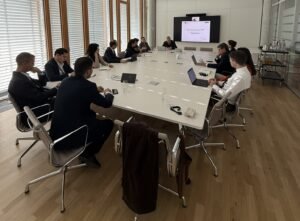 EIPA experts Gracia Vara Arribas, Lead Expert in Public Procurement and EU Law, and Karolis Granickas, Head of Europe and Central Asia at the Open Contracting Partnership, led sessions drawing on case studies from EU Member States. They introduced participants to different service delivery models, including in-house provision, cooperation between public authorities, public procurement, concessions and public-private partnerships (PPPs). The discussions also examined why some public authorities choose to bring previously outsourced services back in-house and what lessons they can draw from these decisions.
 Participants assessed the factors that should guide the choice of a delivery model. These included comparing costs and benefits, evaluating market capacity and institutional resources, and identifying potential risks. They also explored how public authorities can monitor contract performance, service quality and user satisfaction.
Learning from European institutions
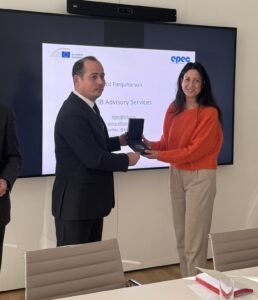 The programme also included exchanges with the European Investment Bank (EIB) and the European Court of Auditors, giving the delegation insight into the preparation, assessment and oversight of public projects.
At the EIB, participants met Joyce Liyan, Head of the Advisory Services Division, and Carmelo Cocuzza, Head of the Infrastructure & Corporates Advisory Unit, both in the EIB Global Directorate. They also exchanged with Edward Farquharson, PPP Advisor in the Public and Infrastructure Finance Division of the Operations Directorate. The discussions focused on the work of the European PPP Expertise Centre (EPEC) and the support available to public authorities when preparing and assessing potential partnerships.
At the European Court of Auditors, Senior Auditor Afonso Malheiro shared the perspective of an independent audit institution. The exchange focused on how public authorities can assess the use of public funds and ensure that expenditure delivers value for money.
“The study visit clearly demonstrated the critical importance of in-depth analysis, comprehensive and full cost calculation, and transparency in implementing public procurement and GovTech solutions. The advanced international experience gained will help elevate our day-to-day work and GovTech projects in our country to a new level of quality.” Ms. Umida Gulyamova, Senior Specialist at the Center for Managing Digital Government Projects under the Ministry of Digital Technologies of Uzbekistan
The study visit gave the delegation an opportunity to compare institutional experiences, discuss practical challenges and identify approaches that could be adapted to Uzbekistan’s public administration context.